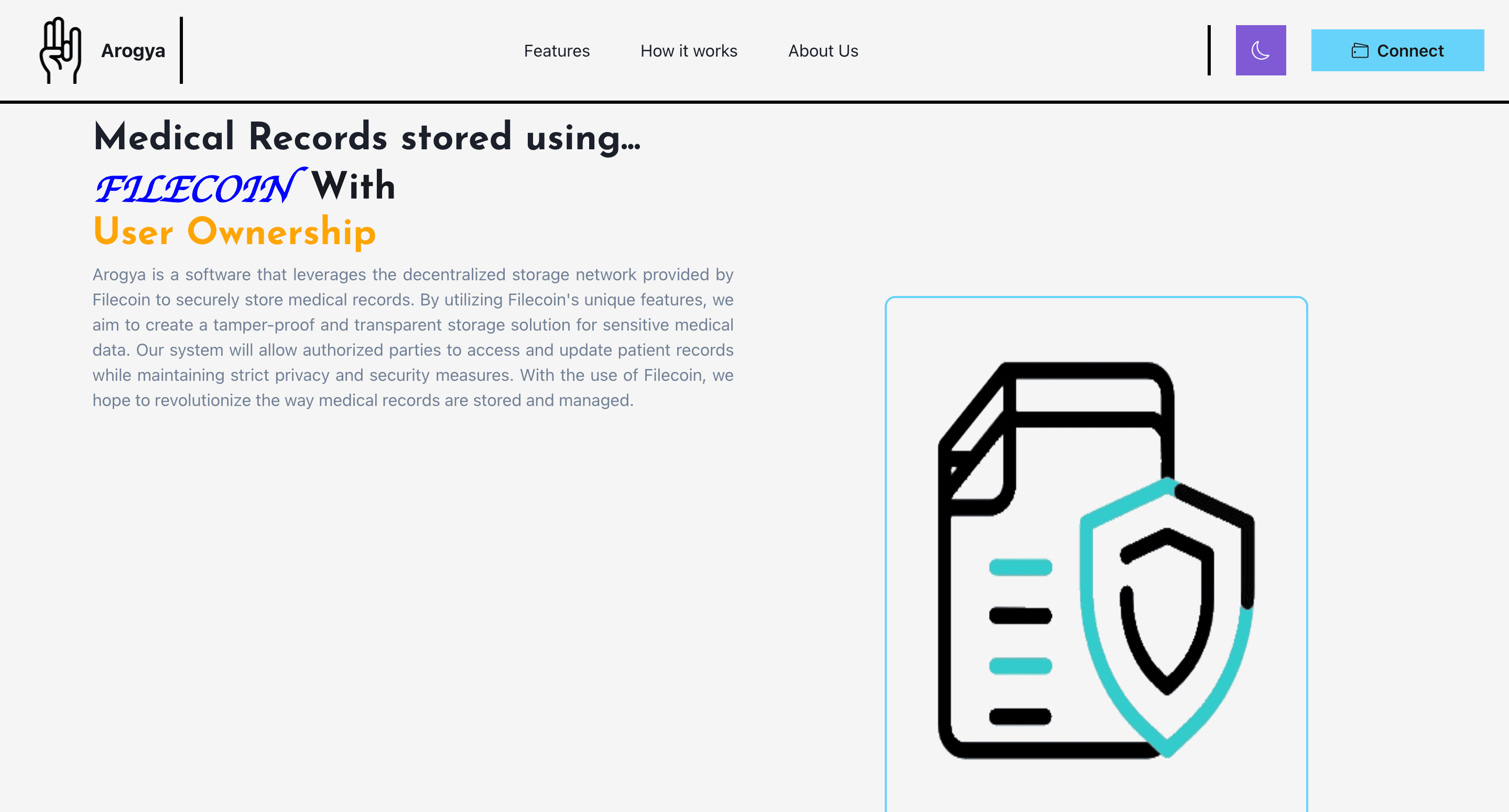
Arogya (Health Vault)
A digital health platform that allows patients to securely manage medical records and share them with authorized healthcare professionals.
The Problem
Medical records are often scattered across different hospitals and clinics, making it difficult for patients and healthcare providers to access important information when it is needed. I wanted to build a centralized platform that allows patients to securely manage and share their medical history.
Engineering Challenges
Protecting sensitive healthcare data while allowing authorized doctors to access patient records required careful authentication, access control, and secure data handling throughout the application.
Step-by-Step Workflow
1. Authentication & Access Control
Users authenticate into the application and are provided role-specific access based on whether they are a patient or a healthcare provider. Protected routes ensure users only access information they are authorized to view.
2. Secure Medical Records
Medical reports, prescriptions, and healthcare information are securely stored and associated with the appropriate patient records, allowing authorized users to retrieve them whenever required.
3. Doctor-Patient Collaboration
Patients can securely share medical information with healthcare providers, making it easier to review previous reports, prescriptions, and treatment history from a single platform.
Why This Architecture?
A relational database was better suited for managing healthcare records because patient information, doctors, appointments, and medical documents have well-defined relationships that require strong consistency.
Key Features
- Role-based authentication for patients and doctors.
- Secure digital storage of medical records.
- Doctor-patient record sharing.
- Centralized medical history management.
- Responsive interface built with Next.js.
Performance
Using a relational database allows medical information to remain organized while making it easier to retrieve related patient records when required.
Trade-offs
Applications handling healthcare information require stricter security, validation, and authorization compared to typical CRUD applications, increasing overall development complexity.
Lessons Learned
Building Arogya helped me understand role-based authorization, relational database design, secure handling of sensitive information, and designing applications where data integrity is a primary concern.